


 Ru
Ru  En
En Science.rf: “MADE IN RUSSIA: FIRST RUSSIAN BESHTAU MONOBLOCKS WILL COME OFF THE CONVEYER IN MARCH 2023”.
Russian developer and manufacturer of goods of radio electronic industry GC “Beshtau” within two months will produce the first serial batch of domestic monoblocks with maximum localization, Oleg Osipov, technical director, co-founder of GC “Beshtau”, told Nauka.rf.
“The plant will produce the first serial batch of monoblocks, as well as 27-inch models of Beshtau monitors, among which there will be versions with a 2K monitor. We plan to produce compact computers with an external power supply – there will be a total of 16 models in the lineup,” he said.
The first models of monoblocks will have a 24-inch screen, later 27-inch models will appear. The basic color of the lineup is black. Other color solutions can be implemented to order.
Earlier in December 2022, the production of Russian Beshtau M24FHD monitors began at the Beshtau Electronics plant in Essentuki. This is a 24-inch model with an IPS screen, already included in the domestic register of radioelectronic products of the Ministry of Industry and Trade. So far, only state institutions and companies will test them – as part of import substitution.
Russian Beshtau laptops to appear by July 2023
According to Osipov, within six months a new plant will be launched in Rostov-on-Don to produce laptops.
“Beshtau” notebooks will have a wide range of possible configurations, depending on the customer’s needs. In fact, the technical characteristics are determined by a combination of the following basic parameters – the model of the processor, the amount of RAM, storage devices, as well as I/O ports. The Beshtau motherboard is quite universal, which allows combining different indicators of the above characteristics,” he specified.
Beshtau Group operates without government subsidies. The total investment volume, including R&D investment costs, for 2022-2023 was planned at RUB 1.2 billion.
“Beshtau notebooks will be unique in their kind, because we tried to place in them the maximum possible number of ports, to make them sufficiently productive in terms of power and at the same time to provide the necessary heat dissipation due to the special composition of plastic for the case, and, in addition, the minimum noise during operation for the comfort of consumers,” – said Osipov.
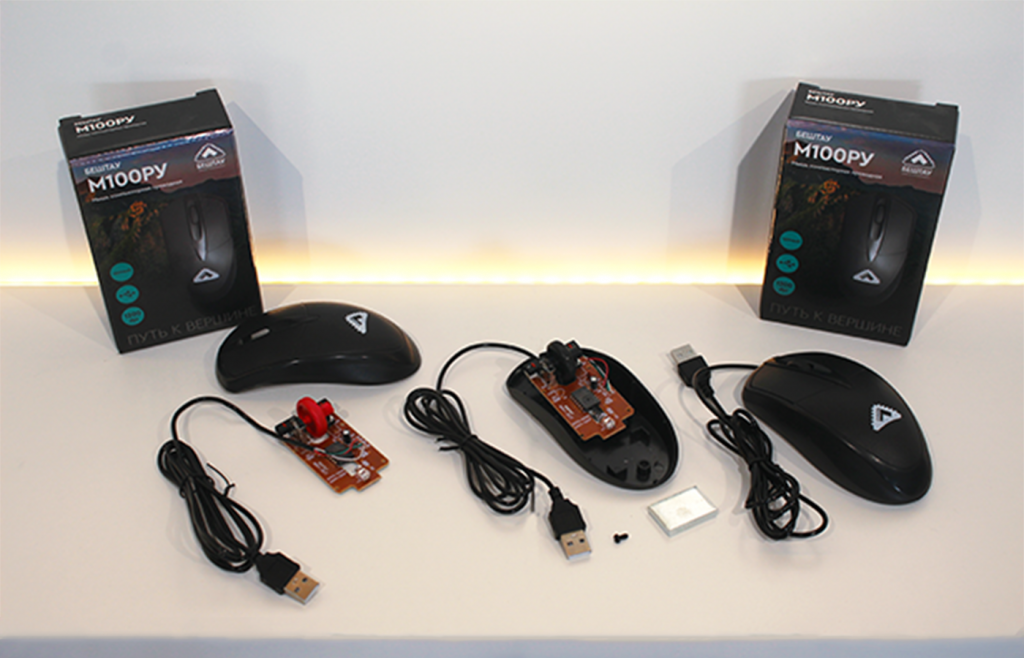
Earlier, production of computer keyboards and mice, including interface boards for them, was launched. In the future it is also planned to produce server and peripheral equipment. Finished products are currently manufactured at the plant in Essentuki, and all radioelectronic boards are manufactured in Rostov-on-Don.
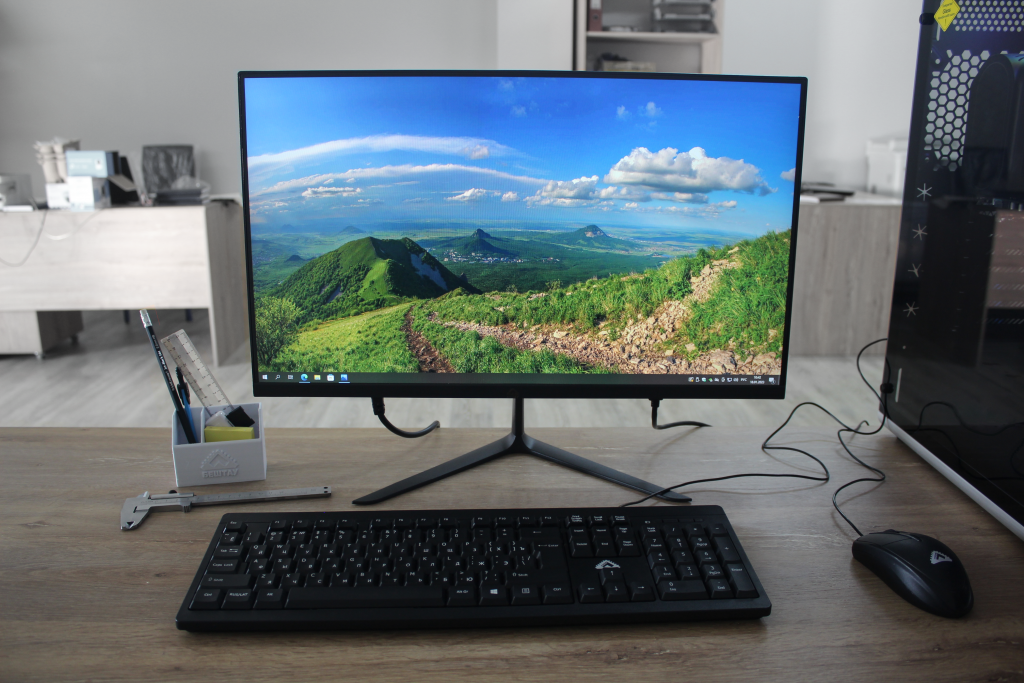
Maximum localization
At the facilities of two Beshtau plants – in Essentuki and Rostov-on-Don – all production processes that are currently possible to carry out in Russia, taking into account the technical, environmental, personnel and legal conditions of the industry, are performed.
“We are doing everything so that the consumer in the process of using our equipment would not feel the differences from imported analogues, nevertheless for the past decades computer equipment manufacturers have made significant progress, and we should pass this way in a shorter time,” – said Osipov
.
In 2023 it is planned to put into operation two more plants – from 9 000 to 12 000 square meters in Rostov-on-Don and Essentuki. In the long term, Beshtau plans to produce 350,000 monitors, 150,000 monoblocks and 100,000 laptops per year. The administrations of the cities of Rostov-on-Don and Essentuki promptly selected land plots meeting the necessary requirements for the new production facility.
At the end of August 2022, Beshtau Group of Companies launched in Rostov-on-Don the production of motherboards, SSD disks and control boards (scalers) for monitors.
The third batch of scalers is being prepared for production in Rostov-on-Don, the volume of which will amount to ten thousand. The production line is capable of mounting 170 thousand components on the board per hour.
The company plans to establish in Russia a full cycle of production of all components for notebooks – from charging batteries to plastic case parts. At present, Beshtau computers are equipped with Intel processors, but the manufacturer is striving for maximum localization of production.
As Vladimir Kuznetsov, Development Director of the Beshtau Group of Companies, specified, the production of such processors requires equipment that is not yet available in Russia.
“We are a young private company, while the task of producing a domestic processor is difficult even for large and financially well-off companies. However, step by step we are improving our competencies, striving to increase the degree of localization of manufactured devices. This process should be evolutionary, and a number of tasks must be solved to create a domestic processor,” he said.
Beshtau Group of Companies is a Russian developer and manufacturer of goods of the radioelectronic industry. The company was established in 2021. It is named in honor of a natural monument – the southern mountain Beshtau, which indicates the focus on import substitution.
At the production facilities the maximum possible localization of the product manufactured in the country at the moment is implemented. Beshtau Group produces motherboards for PCs, laptops and monoblocks, SSD disks, power supplies, lithium ion batteries, and in the near future it is planned to produce RAM as well. The group of companies provides its own demand for scalers (monitor control board), interface boards for keyboards and mice, as well as enclosures for Beshtau computing devices, mice and keyboards (down to the keys).
Currently, the list of materials (BOM sheet – Bill of materials) required for the production of electronic boards – motherboards, SSD disks, scalers and other products is purchased in China, since Russia today lacks the production of the full range of components necessary for production. Taking into account that “Beshtau” produces solutions of its own unique development, the list is formed by the company’s engineers taking into account the possibility of interchangeability of all components. Thus, in the absence of a particular chip, it is possible to adjust the scheme and use other components. This approach minimizes the threat of supplies falling under sanctions restrictions, which can be triggered when purchasing the entire list of components from a single supplier. In-house development of the device and independent selection of materials allows to split purchases and purchase the components required at par from different manufacturers, including, as this industry develops, from Russian manufacturers.
Olga Sitnikova


